Best Resistance Bands for Beginners at Home (2026 Buying Guide)
The best resistance bands for beginners at home are a simple loop or tube set. Here are 4 picks and a short starter workout.
As an Amazon Associate I earn from qualifying purchases. Specs below come from manufacturer pages and independent reviews. Prices change, so use the links to check the current price on Amazon.
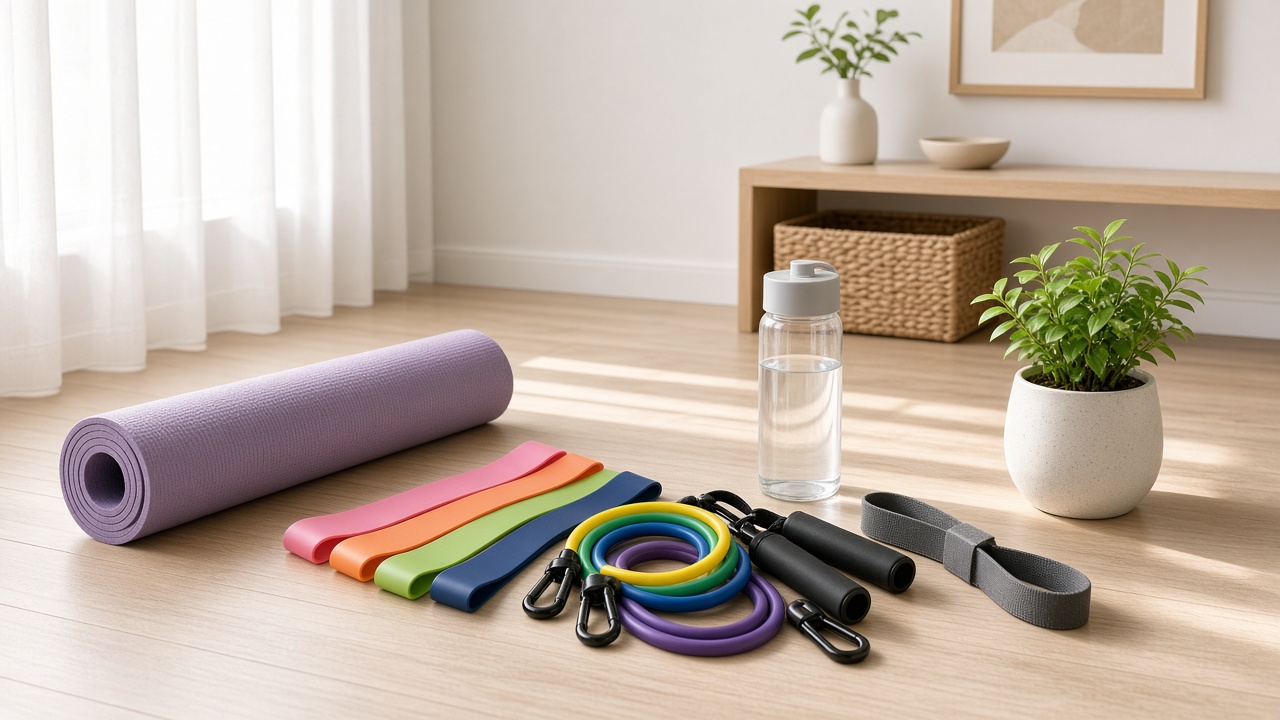
Resistance bands are one of the easiest ways to start strength training at home. They take up little space, they are quieter than weights, and a good set can cover squats, rows, presses, and glute work. Mini loops, tube bands with handles, long pull-up bands, and flat therapy bands all do different jobs, so you do not need every type on day one.
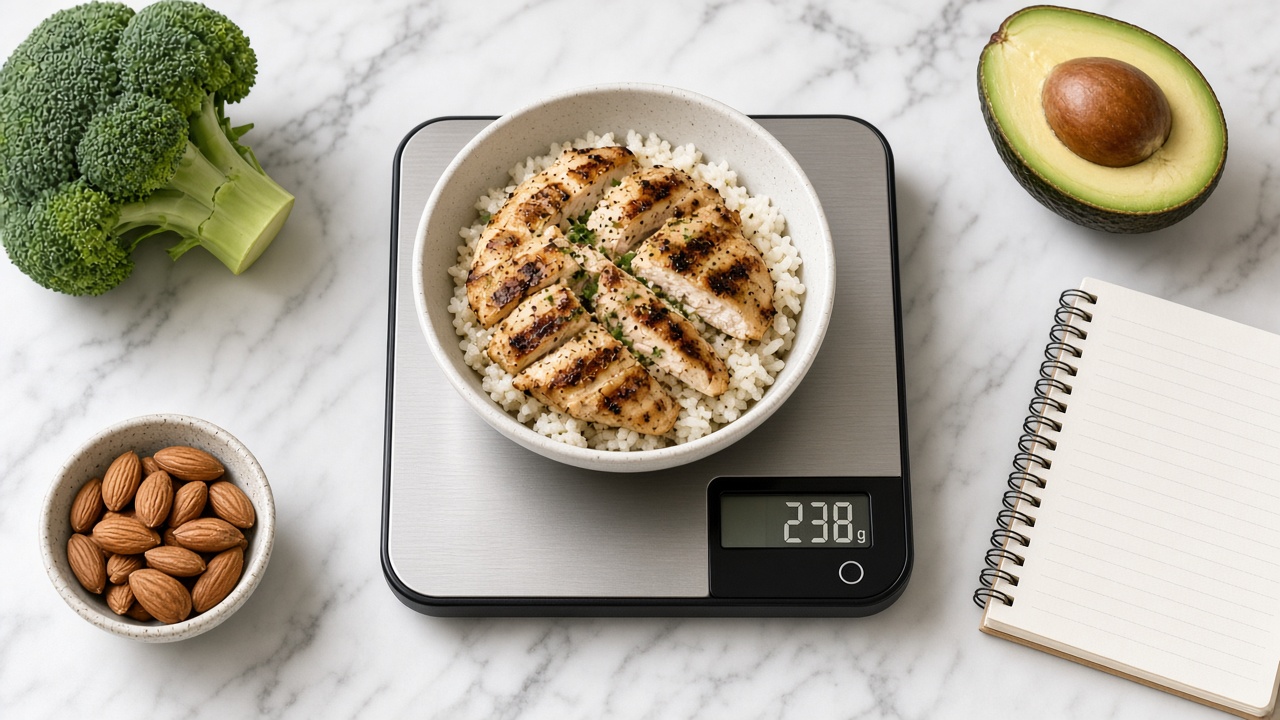
A loop set covers warm-ups and lower-body work; a tube set with a door anchor is the closest thing to a small cable machine. If you also track what you eat, a food scale for counting macros pairs well with these workouts, but the bands themselves are the place to start.
Quick picks
Best overall: Bodylastics 5 Band Pro Series Set — stackable tube bands with handles, a door anchor, and ankle straps for full-body work.
Best budget: Fit Simplify Resistance Loop Exercise Bands, Set of 5 — inexpensive mini loops for warm-ups, glute bridges, and lateral walks.
Best for pull-up practice: Serious Steel 41 Inch Starter Resistance Band Set — long loop bands for assistance, mobility, and added resistance.
Best latex-free: THERABAND Resistance Bands Set, Beginner Kit, Non-Latex — flat yellow, red, and green bands that are a physical-therapy standard.
Bodylastics 5 Band Pro Series Set: best overall
Who it’s for: Beginners who want one kit for rows, presses, curls, squats, and leg work at home.
This is the set to get if you want bands that feel like a cable machine. Wirecutter has long recommended Bodylastics stackable tubes because each one has an inner safety cord designed to limit overstretching, a common reason bands snap. The 5 Band Pro Series Set includes five natural latex tubes rated 3–10, 5–20, 8–30, 13–50, and 19–80 lb (up to 190 lb stacked), plus handles, ankle straps, a door anchor, and a bag.
Pros
Stackable clips let you add resistance as you get stronger
Inner safety cord helps reduce snap-back if a tube fails
Door anchor, handles, and ankle straps cover upper- and lower-body moves
Cons
Natural latex, so skip it if you have a latex allergy
More pieces to store than a simple loop set
The “190 lb” figure is a stacked maximum; some listings are 6-band or larger kits
Key specs: Five stackable tubes (3–10 through 19–80 lb); 2 handles, 2 ankle straps, 1 door anchor, carry bag; natural Malaysian latex with Snap Reduction safety cord.
Fit Simplify Resistance Loop Exercise Bands, Set of 5: best budget
Who it’s for: Anyone who wants a cheap, compact set for warm-ups, glute work, and light strength training.
These 12-by-2-inch mini loops are a common starter set: five color-coded latex bands, a carry bag, and a guide. Fit Simplify lists the levels as extra light (yellow, 2–4 lb), light (blue, 4–6 lb), medium (green, 10–12 lb), heavy (black, 15–20 lb), and extra heavy (red, 25–30 lb). Start light, then move up when the work feels easy.
Pros
Inexpensive, compact, and easy to toss in a bag
Five clearly labeled levels, plus a guide
Good for glute bridges, clamshells, lateral walks, and squat warm-ups
Cons
Mini loops can roll up the legs, especially on bare skin
Light overall resistance, and they are not designed for pull-ups or rows with handles
Made of natural latex
Key specs: 12 in x 2 in loops; 100% natural latex (not TPE); five levels from about 2–4 lb to 25–30 lb; carry bag and guide included. The brand advertises a lifetime satisfaction guarantee.
Serious Steel 41 Inch Starter Resistance Band Set: best for pull-up practice
Who it’s for: Beginners who want long loop bands for mobility, added resistance, and help working up to a pull-up.
Serious Steel’s 41-inch bands are a classic “superband”: 15 layers of natural latex, 4.5 mm thick, sold in starter combinations. The lightest set is #0/#1/#2: orange (2–15 lb), purple (5–35 lb), and red (10–50 lb). Those ranges are measured out to about 2.5 times the band’s length, so treat them as a guide. For pull-up assistance, many beginners need a thicker band, such as the #3 blue (25–80 lb) or #4 green (50–120 lb), so check whether the listing is the #0/#1/#2 set or a heavier combo such as #1/#2/#3.
Pros
Versatile for mobility, resisted push-ups, and pull-up or dip assistance
Durable layered construction, with no handles or clips to lose
Individual heavier bands are available if you outgrow the starter set
Cons
Natural latex; the coating can irritate sensitive skin until the band is washed
No handles or door anchor, and thinner bands can dig into skin
Keep them off rough floors and direct sun; the maker estimates a 12–18 month home lifespan with regular use
Key specs: 41 in long, 4.5 mm thick, 15 layers of natural latex; #0 2–15 lb, #1 5–35 lb, #2 10–50 lb (other starter combos available).
THERABAND Resistance Bands Set, Beginner Kit, Non-Latex: best latex-free
Who it’s for: People with a latex allergy, or anyone who wants light, flat bands for rehab-style work.
THERABAND’s color system is the one many physical therapists still use. The beginner kit includes yellow, red, and green bands, typically listed as 5 feet long and 4 inches wide. At 100% elongation (stretched to twice its resting length), THERABAND’s chart lists about 3.0 lb, 3.7 lb, and 4.6 lb. Confirm the listing says non-latex if that matters; latex versions use the same colors.
Pros
Non-latex option for sensitive skin and latex-free homes
Familiar, gradual color progression used in clinics
Flat bands wrap, tie, or loop, and they pack down small
Cons
Light resistance; not the best tool for heavy lower-body strength
No handles or anchors included, and a nicked band should be replaced
Confirm you are buying the non-latex kit, not a similarly named latex listing
Key specs: Yellow, red, and green non-latex bands; typically 5 ft x 4 in; about 3.0–4.6 lb at 100% stretch, with a kit range often listed up to about 6.7 lb.
A simple beginner routine
Do this two or three days a week, with a rest day in between. Use a band that lets you complete 8–12 controlled reps with 1–2 reps left. Do 2–3 sets and rest 45–60 seconds. If you only have mini loops, skip the door-anchor moves.
Lateral band walks. Loop a mini or fabric band above your knees and step sideways for 8–12 steps each way.
Glute bridges. Lie on your back, band above your knees, and lift your hips. Lower slowly.
Banded squats. Keep the loop above your knees, or stand on a tube or long band and hold the handles at your shoulders. Sit back, then stand without letting your knees cave in.
Standing rows. Anchor a tube in a closed door, or loop a long band around a sturdy post. Pull your elbows back and squeeze your shoulder blades.
Standing chest press. Face away from the anchor and press forward without shrugging. No anchor? Do push-ups with a long band across your back.
Band pull-aparts. Hold a light flat band or long loop at shoulder height and pull it apart until your arms form a T.
Inspect bands before every session. Do not stretch a worn band, and do not pull a tube toward your face. Shut a door-anchor door completely and test it with a light pull first.
Buying guide: what actually matters
Match the band to the job. Mini loops shine on glutes and warm-ups. If skinny loops roll up your legs, a fabric hip band is a useful add-on. Tube bands with handles are best for rows, presses, and curls. Long 41-inch loops are the right tool for pull-up assistance. Flat therapy bands are best for light, controlled work and latex-free needs.
Treat “pounds” as a range. Band tension changes as the band stretches. A 50 lb label is not the same as a 50 lb dumbbell. Choose a set with several levels so you can go lighter for arms and heavier for legs.
Check the material. Most high-quality bands are natural latex, which is durable but a problem if you have a latex allergy. If that is you, start with the non-latex THERABAND kit.
Look at the extras. A door anchor and comfortable handles turn a tube set into a full-body gym. Replace bands that are cracked, sticky, or peeling.
FAQ
Can beginners get stronger with only resistance bands? Yes, especially if you are new to strength training. Use a band that challenges the last few reps, then move to a slightly stronger band when 12 reps feel easy.
Which type of band should I buy first? If you want one starter purchase, get a tube set with handles and a door anchor, such as the Bodylastics kit. If you only have a little to spend, get the Fit Simplify mini loops and add a tube set later.
Are resistance bands safe? They are when you inspect them, use a secure anchor, and avoid stretching a damaged band. The usual risks are a snap-back, a slipping door anchor, or latex irritation.
Do I need a door anchor? Only for tube-band rows and presses. Mini loops and fabric hip bands do not need one. Never anchor a band to a door that could pop open mid-rep.
The bottom line
If you want one beginner kit for full-body training at home, get the Bodylastics 5 Band Pro Series Set. If you want the cheapest useful start, get the Fit Simplify mini loops. Add Serious Steel for pull-up practice, and choose the THERABAND non-latex beginner kit if latex is a problem.
Check the current price before you buy, start with the lighter bands, and give the routine above a few weeks.